






Jump to Navigation

Chicago, Illinois Personal Injury Blog

Chicago Wrong-Way Driving Accidents Usually Involve Alcohol

  • 10
  • May
    2012

Impaired driving takes many forms. There are lots of new synthetic drugs these days that add to the potentially lethal list that already includes marijuana, heroin, cocaine and meth.

But there is also an old standby that has never gone away (even during Prohibition): alcohol.

When a driver has too much to drink, the result can be a Chicago drunk driving accident.

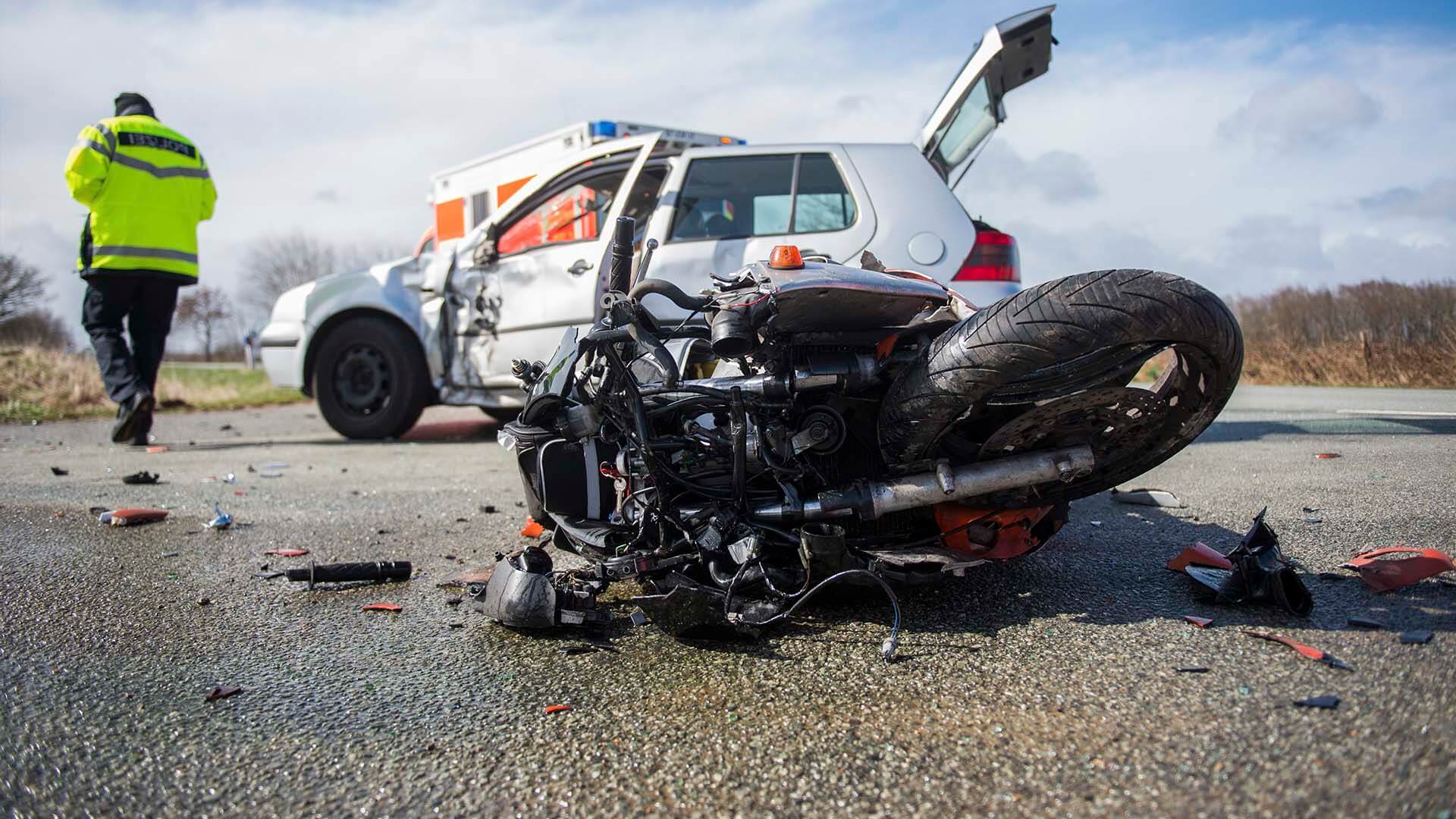
One such accident occurred recently on the Bishop Ford Expressway. Ronnie Head, a 54-year-old man from Dolton, Illinois, was killed when his car was struck by a vehicle going the wrong way on the expressway. Head was a father of two and worked for the Chicago Tribune for many years as a press operator.

Police who investigated the fatal accident said the 24-year-old man who caused it was apparently under the influence of alcohol.

The 24-year-old was taken to Christ Hospital after the collision and was in critical condition.

Chicago Truck Accidents and the Problem of Reincarnated Companies

  • 03
  • May
    2012

Reincarnation, strictly speaking, is mystical concept with roots in Hindu religion. It refers to a process of rebirth that Hindus believe involves something called the transmigration of souls.

Chicago truck accident lawyers and other safety advocates know, however, that there is also another meaning to term. Trucking companies and other motor carriers that fail to meet safety guidelines and go out of business sometimes try to reconstitute themselves as a different entity.

Such "reincarnated" companies are notorious for safety violations of many different types. These violations can range from improper handling of hazardous materials to failure to perform required license checks on truck drivers.

Last week, the Federal Motor Carrier Safety Administration took action to confront these reincarnated carriers. FMCSA proposed a final rule that will make it more difficult for carriers that have been sanctioned for safety violations to reconstitute themselves as different entities.

In other words, reincarnation should not be allowed to let bad transportation industry actors get around the law.

Incentive Program Encourages Teenage Drivers to Stay Safe

  • 27
  • April
    2012

In choosing stories, the media focus tends to be on what's wrong with the world, not what's right with it. President Reagan used to point this out, quite correctly.

In the spirit of lifting up the positive, then, consider a program operating in suburban Chicago that rewards teenagers for safe driving records.

Chicago car accident lawyers and other safety advocates are well aware of the high accident rate among teenage drivers. Car crashes are the leading cause of death among young people - and teens often injure or kill others on the road.

But not all teens are dangerous drivers. In fact, a program called Operation Click is designed to encourage safe driving by teens and recognize them for it. The program is in place in at least 30 schools in Illinois and Wisconsin.

Students sign a contract at the beginning of the year to follow safe-driving practices. At the end of the year, students who have kept their end of the deal get a chance to win a new car.

Chicago Distracted Driving Accidents and Employer Responsibility

  • 20
  • April
    2012

So far, public safety efforts to prevent distracted driving have focused mostly on individual drivers. But now, many businesses are realizing they have a lot at stake if their employees are driving while distracted.

Chicago truck accident lawyers and other safety advocates are encouraged by this development. Carelessness and disregard for others behind the wheel of a company vehicle can be grounds for a lawsuit or other problems if a wreck occurs. And this gives businesses an incentive to design and implement policies to help their employees stay safe behind the wheel.

Businesses have even more incentive now that a federal rule banning handheld cellphone use by commercial drivers has taken effect.

To be sure, the rule isn't perfect. Hands-free devices were still allowed, and there are many company drivers who still use handheld phones, even though they're breaking the law to do so. If caught, however, a commercial driver could be fined up to $2,750 per offense. Multiple offenses could result in the loss of commercial driving privileges.

Research Shows Increased Risk of Fatal Car Accidents on Tax Day

  • 12
  • April
    2012

The familiar phrase dates at least to the time of Benjamin Franklin. Life's two certainties, the saying goes, are death and taxes.

Recent research indicates, however, that there is actually a connection between the stress of tax time and the frequency of car accidents.

Chicago auto accident attorneys and safety advocates are naturally examining this research evidence with interest.

The research was reported this week in the Journal of the American Medical Association. It was based on federal traffic safety data spanning 30 years.

The researchers found that 6,783 traffic-related deaths had occurred during that period on Tax Day. Tax Day, the day on which federal taxes are due, usually falls on April 15.

The 6,783 deaths on Tax Day averaged out to 226 per day. That compares to an average of 213 deaths on other days in April. In other words, 13 more people died on Tax Day than on other days, a difference of six percent.

New GPS Device Allows Parents to Monitor Chicago Teenage Drivers

  • 06
  • April
    2012

"It takes a village," it's often said, to raise a child. That includes helping teenage drivers learn how to handle vehicles safely - so that they are not dangerous both to others and themselves out on the road.

Chicago car accident lawyers and other safety advocates are therefore following with interest the efforts of a Chicago company that is working to create a GPS device to monitor teenage drivers in real time. The device could offer reports on key data elements, including location and speed.

The device is called iTeen365. It looks somewhat like a cellphone, but is designed to be implanted in a car's dashboard. The sensors it is equipped with gather driving-related information. This information can then be transmitted to computers and smartphones.

Joe McBreen, the CEO of the company that makes the iTeen365, is naturally an advocate for its advantages. "Teenagers drive a lot more cautiously when their parents are in the vehicle with them, or there is a driving instructor in the car with them," he said. "They will drive correctly, within speed limits, so once they are aware they're being monitored they tend to drive more cautiously."

Rule to Reduce Car and Truck Accidents Caused by Blind Spots Delayed

  • 02
  • April
    2012

In driving school a new driver is constantly warned to check the blind spots of the vehicle, especially when going in reverse or changing lanes. The lesson is not lost on experienced drivers, but even veteran drivers may find it harder today to check blind spots because the size and design of trucks and cars today have increased the size of such hard-to-see areas.

To counter the growing size of blind spots in contemporary cars and to prevent related motor vehicle accidents, the National Highway Traffic Safety Administration proposed a new rule that would require rearview back-up cameras in all new vehicles. However, the rule has been postponed.

The postponed rule would have required that drivers be able to see directly behind the vehicle when it is put in reverse. According to the Senior Policy Counsel for Consumers Union, all vehicles have blind spots directly behind the rear bumper, and it can vary in size from five to 50 feet. Therefore video cameras can help drivers see areas they cannot see by using mirrors or by turning around.

Trucks and SUVs have the largest blind spots because of their size, but in recent years the blind spots of cars have also increased because of design changes that have improved aerodynamics. Luxury cars already feature back-up cameras, and the cameras are an option in many types of new cars.

Technological Temptations and Illinois Distracted Driving Accidents

  • 23
  • March
    2012

Distracted driving, it's sometimes said, has been around since the Model-T. And it's true that cell-phones and texting are certainly not the only types of distracted driving that can cause accidents. Fiddling with the radio or changing a CD can be as well.

But the electronic toll on drivers' attention keeps increasing. Chicago car accident lawyers that deaths and injuries are often the result of this diminished attention.

Are automakers responding by designing cars to keep the driver from being tempted by too many technological interruptions?

The answer, unfortunately, is mostly no.

The National Highway Traffic Safety Administration wants devices built into cars to automatically disable phone calls, texting, and other distractions unless the vehicle is parked. NHTSA believes that even inputting information into a navigation system is dangerous when the vehicle is moving.

NHTSA intends to propose limits on the use of hand-held devices. The agency also plans to issue guidelines for voice-activated devices that are built into vehicles.

In Illinois, the House of Representatives has passed a bill to require drivers to use a hands-free device when talking on a cell phone. The state already has a texting while driving ban.

Driver Fatigue and Chicago Truck Accidents

  • 14
  • March
    2012

It doesn't matter what type of vehicle - a plane, a train or an automobile. Fatigued driving is dangerous driving.

A recent research study quantified the extent of driver fatigue. The study by the National Sleep Foundation (NSF) found that transportation operators tend to be sleepier than most other employees. The lack of proper amounts of sleep puts them at greater risk of vehicle accidents.

Nearly 60 percent of train operators reported in the NSF survey that they seldom get a good night of rest on a work night. Half of the pilots surveyed and 44 percent of the truck drivers answered that way as well.

The numbers were somewhat lower for drivers of buses, taxis and limousines. This may be because those drivers have more standard hours than pilots or truckers. And yet more 29 percent - more than 1 in 4 - of the drivers of buses, taxis and limousines reported that they seldom get a good night's sleep on a work night.

In the case of truckers, federal regulators have released new hours-of-service rules to cut the maximum work week for tractor-trailer drivers. The new rules reduced the maximum work week for drivers from 82 to 70 hours.

March is Brain Injuries Awareness Month

  • 09
  • March
    2012

Traumatic brain injuries are far too frequent in America today. Over 1.7 people suffer such injuries every year. This is a figure that needs to be reduced - as rapidly as possible.

Chicago head injury lawyers know that setting aside a specific period of time for enhanced awareness of head injuries is one way to begin doing this. That is why the Brain Injury Association of America (BIAA) and its network of state affiliates have designated March as Brain Injury Awareness Month.

The goals to be accomplished through increased awareness of head injuries are two-fold. One is improving services for people who have already suffered brain injuries. The other is to prevent car accidents and other causes of these injuries.

Nationally, the month's awareness events include a special brain injury awareness day at the Capitol in Washington, D.C. on March 21. The schedule will feature an informational fair, a briefing and a reception.

Contact Us Office Location Information

888-322-1373 | 847-662-3303

Salvi & Maher, L.L.C.
325 Washington St
Waukegan, IL 60085

Telephone: 847-662-3303
Fax: 847-662-3453
Waukegan Law Office

Salvi & Maher, L.L.C.
1755 S. Naperville Road
Wheaton, IL 60187

Phone: 630-510-3232
Wheaton Law Office

Salvi & Maher, L.L.C.
53 W. Jackson Blvd
Suite 1401
Chicago, IL 60604

Phone: 888-322-1373
Chicago Law Office

Salvi & Maher, L.L.C.
7408 E. Tryon Grove Road
Richmond, IL 60071

Phone: 815-667-3303
Richmond Law Office